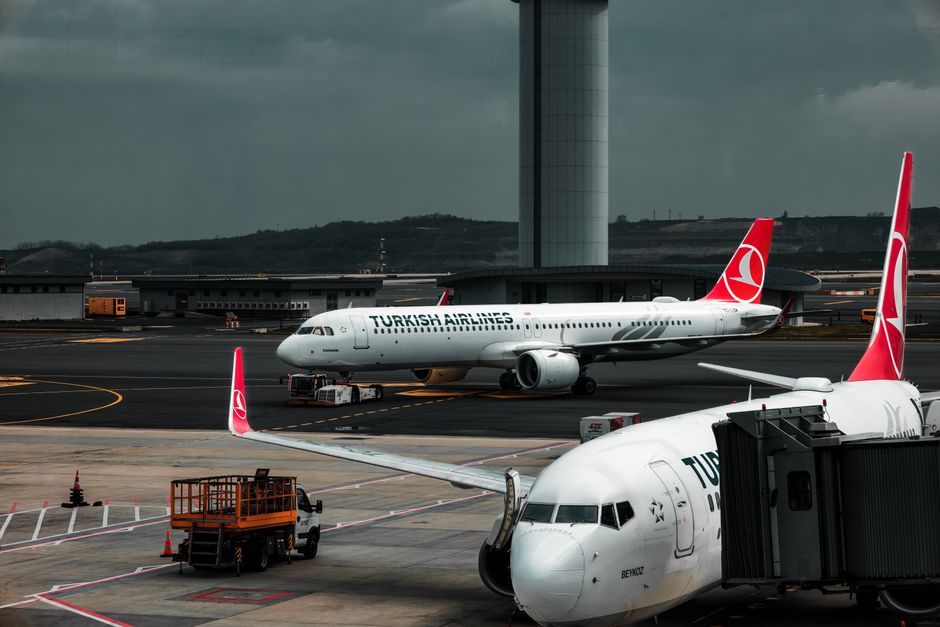
Turkish Airlines has driven its primary hub past London Heathrow to claim the title of Europe's busiest airport for the first time since pandemic-era restrictions ended. Airports Council International data shows Istanbul handled 8.15 million passengers in July, beating Heathrow's 7.86 million by roughly 290,000 travelers. This shift stems from steady expansion at the Turkish mega-hub paired with stagnant capacity in West London, where two runways operate near saturation. Heathrow's July numbers dropped 1.5 percent year-on-year, heavily impacted by a 20.2 percent slump in Middle East passenger traffic due to ongoing regional conflicts. Meanwhile, Istanbul's traffic climbed 2.3 percent.
Opening in 2018 and absorbing Turkish Airlines' full schedule the following year, the Turkish facility spans 76 square kilometers with five runways and a massive single terminal. Turkish Airlines controls roughly 80 percent of departures from the hub, serving over 330 destinations across approximately 130 countries. While Heathrow management works to attract new carriers like Riyadh Air and Alaska Airlines, physical expansion remains stalled. British transport officials continue debating a long-delayed third runway, meaning the UK gateway cannot increase its annual passenger ceiling of roughly 84 million until the next decade at the earliest.
What This Means for Americans Traveling to Turkish Airlines
For US tourists, this ascendance makes Istanbul an increasingly dominant gateway for journeys into the Middle East, Africa, and Asia. Americans traveling to Turkish Airlines now frequently route through the sprawling mega-hub rather than traditional British or continental connectors. Turkish Airlines extends deep connectivity from North America into its central base, offering seamless onward transit. US citizens require an e-Visa to enter Turkey, though transit passengers staying airside do not need one. The Istanbul facility operates on a vast scale, requiring transatlantic passengers to budget substantial connection times—often exceeding two hours—to traverse the massive single terminal between boarding gates.
Travel Tips for Americans Visiting Turkish Airlines
- Build in extra transit time: The massive scale of the Istanbul terminal requires significant walking distances between connecting gates, making tight layovers risky for US arrivals.
- Secure electronic entry paperwork in advance: Americans planning to leave the airport during a layover must apply for a Turkish e-Visa online prior to departure rather than relying on visa-on-arrival counters.
- Leverage the carrier's extensive network: US travelers can utilize Turkish Airlines to access secondary European and Middle Eastern cities without backtracking through traditional Western European hubs like London or Frankfurt.
American travelers should check the latest U.S. State Department travel advisory for Turkish Airlines before booking.
Photo by Hobi Photography on Pexels
Source: Euro Weekly News